In Florida’s luxury yacht industry, fabrication schedules are tight, finish standards are high, and production delays are expensive. Every stage of the build depends on dependable equipment, especially in processes involving chemicals, coatings, solvents, adhesives, and other critical fluids. While hull construction and propulsion systems often get the attention, pump performance behind the scenes plays a major role in keeping fabrication on schedule. Reliable pump systems help shipyards protect uptime, maintain finish quality, and reduce avoidable waste across the operation.
Advanced pump systems are critical because they help shipyards transfer chemicals safely, circulate paints consistently, reduce downtime, and maintain tighter control over finishing and fabrication processes. In practical terms, the right pump setup improves reliability, supports better coating results, reduces material loss, and helps production teams meet demanding schedules with fewer interruptions.
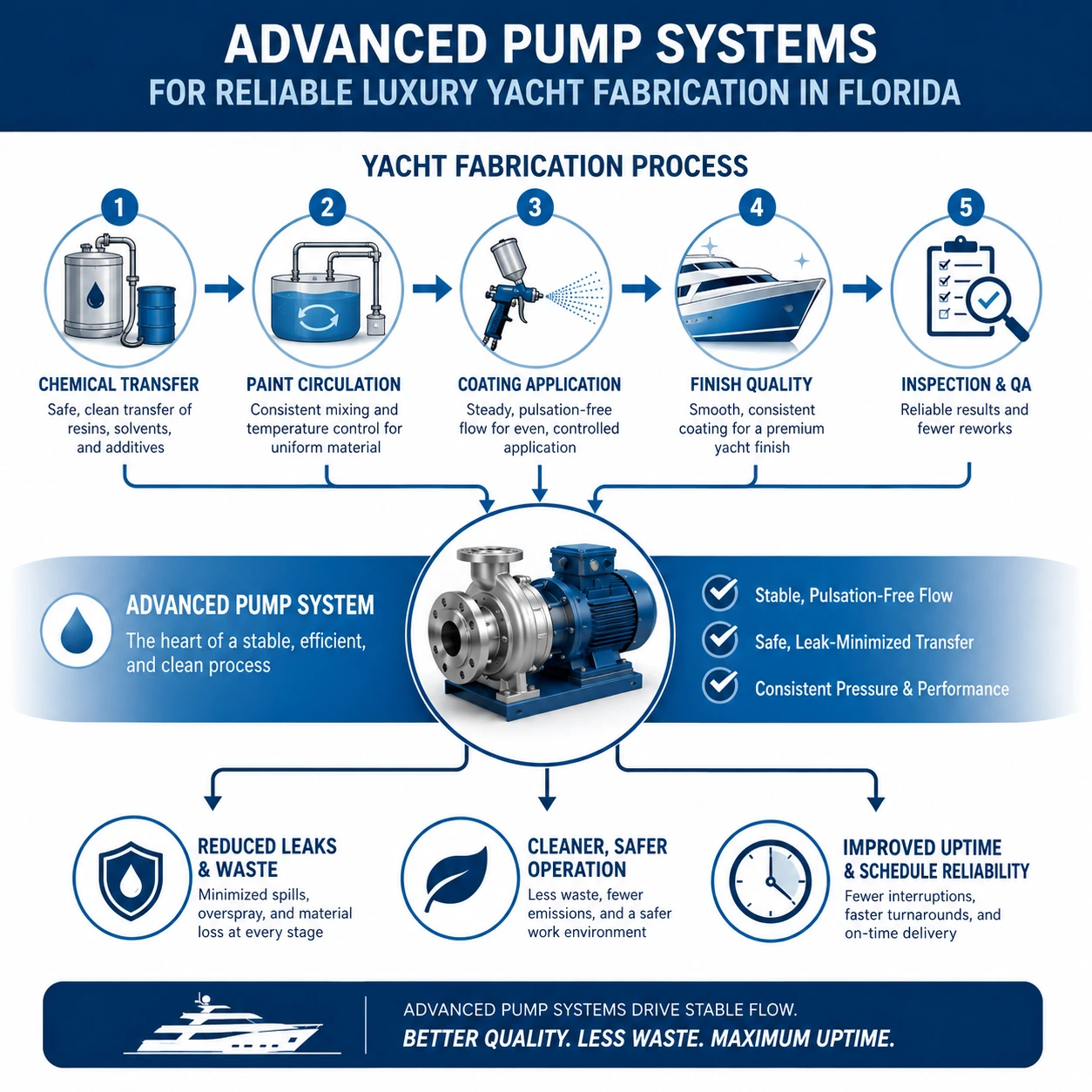
Luxury yacht construction depends on controlled fluid handling across multiple stages of production. Pumps are used where shipyards need reliable movement of paints, solvents, resins, adhesives, and other process-critical materials. If these systems underperform, the impact can extend well beyond one isolated task. A fluid-handling issue can slow finishing work, complicate application quality, and create delays that affect downstream production.
For shipyards evaluating dependable fluid-handling equipment for demanding industrial applications, Southeast Turbo Machinery Equipment offers application-focused industrial pump solutions built around reliability, efficiency, and fit-for-process performance.
Shipyards rely on chemical pumps to move solvents, adhesives, resins, and related materials safely and consistently. These applications demand more than basic transfer capability. Pumps must be able to handle the chemical properties of the fluid, support predictable delivery, and reduce the risk of leakage or process disruption.
When a chemical transfer pump is properly selected for the application, it can help support:
In shipyard environments where scheduling and process coordination matter, safer and more dependable chemical transfer directly supports smoother operations.
In luxury yacht fabrication, finish quality is a visible part of the final product value. Paint circulation systems need to provide steady, repeatable flow to support even application and reduce defects. When circulation is inconsistent, the result can be uneven coatings, more overspray, added cleanup, or rework that slows the entire job.
Advanced paint pump systems help shipyards maintain tighter control over:
That matters because premium finishes are not just about appearance. They are also about process stability, labor efficiency, and reduced disruption during final fabrication stages.
In competitive yacht production, uptime is not optional. When a pump fails unexpectedly, entire fabrication steps can be delayed while crews troubleshoot, clean up, repair equipment, or repeat work. A problem in chemical transfer or paint circulation can quickly grow into a scheduling issue that affects labor planning and delivery commitments.
Reliable pump systems help reduce those risks by supporting:
For operations leaders, that reliability translates into schedule protection. For procurement teams, it strengthens the case for equipment selected on long-term value instead of upfront cost alone.
Leak prevention is especially important in applications involving paints, coatings, solvents, and chemicals. Even minor leakage can create cleanup demands, material loss, safety concerns, and process interruptions. In finishing operations, uncontrolled spills or contamination can also compromise the work environment and create additional handling requirements.
Leak-resistant pump designs can help shipyards improve:
These are practical advantages that support both day-to-day efficiency and long-term process reliability.
Advanced pump systems do more than move fluid more reliably. They also influence labor productivity, material consumption, rework rates, and maintenance demands. A better-performing system can reduce the number of interruptions teams have to manage while helping shipyards maintain more predictable output.
When pump systems are aligned with the application, shipyards may benefit from:
That makes pump reliability part of the broader operational efficiency strategy, not just an equipment maintenance concern.
Florida shipyards are under increasing pressure to reduce waste, maintain cleaner operations, and support more responsible production practices. Advanced pumps contribute to that effort by helping control chemical and coating use more effectively, reducing unnecessary material loss, and supporting cleaner handling conditions throughout fabrication.
In applications where reducing overspray, spills, emissions, or cleanup matters, pump selection becomes part of a shipyard’s overall approach to process discipline and operational responsibility.
Choosing a pump system for yacht fabrication requires more than matching a flow rate. The best fit comes from evaluating how the equipment performs under the actual operating conditions of the process.
Key considerations often include:
For operations that also depend on rotating utility equipment elsewhere in the facility, Southeast Turbo Machinery Equipment provides industrial compressor systems for demanding production environments as well.
In Florida luxury yacht fabrication, advanced pump systems play a critical role below deck and behind the scenes. They help shipyards transfer chemicals safely, circulate paints consistently, reduce downtime, and maintain the quality standards expected in premium marine construction. When pump systems are properly matched to the process, they support better schedule control, cleaner operation, and stronger long-term performance.
If your current setup is contributing to finishing inconsistencies, chemical-handling issues, or avoidable downtime, it may be time to reassess whether the system is aligned with the demands of your application. To discuss your requirements and identify solutions built for reliability and uptime, connect with Southeast Turbo Machinery Equipment through the contact page.
Pump systems are important because they support the safe and reliable handling of chemicals, paints, solvents, and other process-critical fluids used throughout yacht fabrication.
Paint circulation pumps improve finish quality by helping maintain steady flow during coating application, which supports more even coverage and reduces defects, waste, and rework.
When a chemical or paint pump fails, shipyards can experience downtime, cleanup issues, schedule delays, wasted materials, and quality problems that may require additional labor and rework.
Shipyards should consider fluid compatibility, flow consistency, leak resistance, reliability, maintenance requirements, and how the pump will affect uptime and material efficiency.
Yes. Advanced pumps can support more sustainable yacht production by reducing leaks, limiting wasted chemicals and coatings, and helping shipyards maintain cleaner, more controlled operations.

