
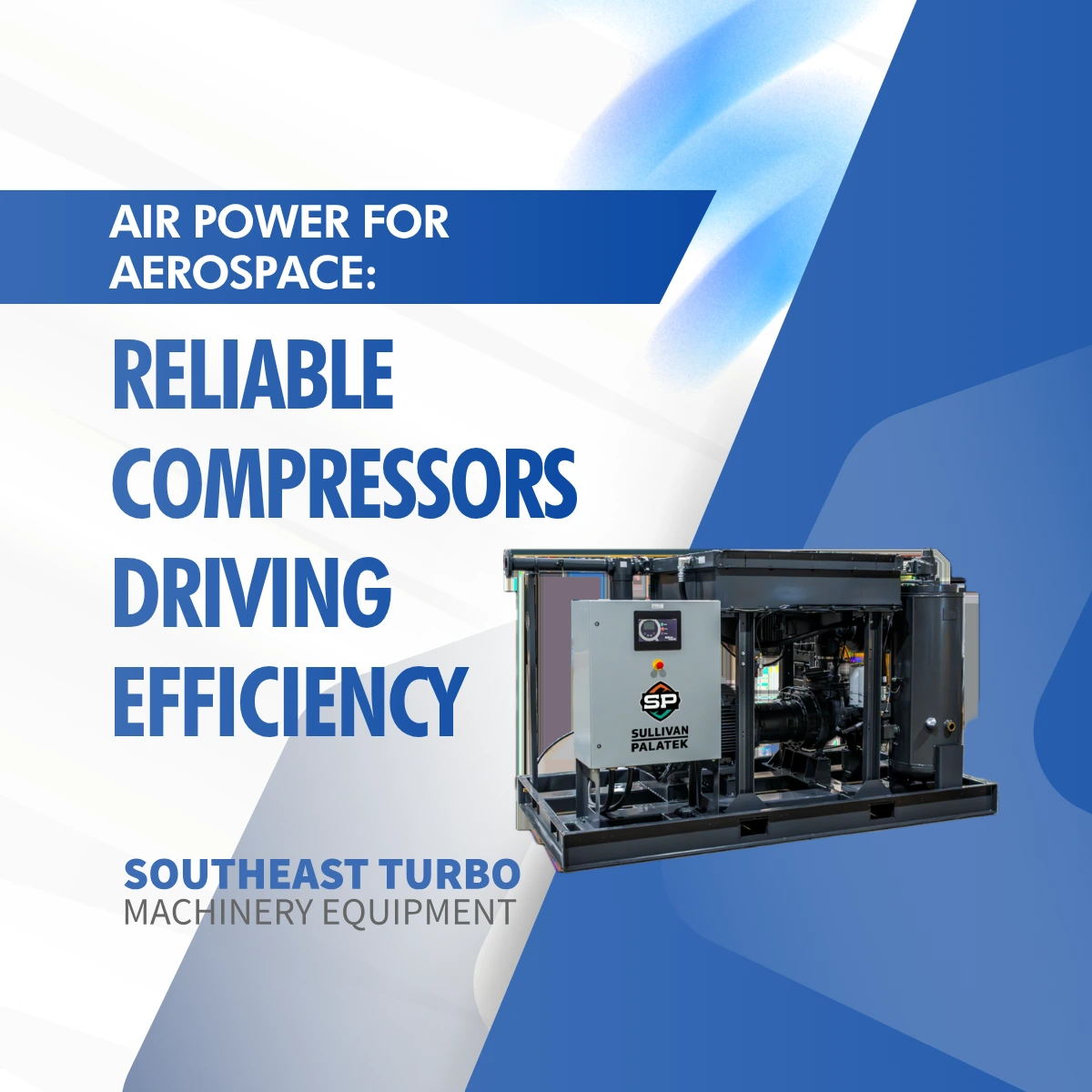
In aerospace plastics manufacturing, precision depends on stable production conditions. Components molded or extruded from advanced polymers must meet demanding standards for strength, weight, dimensional consistency, and long-term durability. That level of control is difficult to maintain without dependable compressed air. Reliable compressor systems do more than support the process in the background. They help drive product quality, reduce operational risk, improve efficiency, and strengthen long-term return on investment.
What Do Reliable Air Compressors Do in Aerospace Plastics Manufacturing?
Reliable air compressors help aerospace plastics manufacturers maintain consistent molding and extrusion conditions by supplying clean, stable compressed air with fewer interruptions. In practical terms, that means tighter process control, reduced defects, lower downtime, better energy performance, and stronger long-term operating value.
Key Takeaways
- Reliable compressed air is essential for precision molding and extrusion in aerospace plastics applications.
- Stable air supply helps reduce defects, scrap, troubleshooting, and production interruptions.
- Advanced compressor technology can improve efficiency, air quality, and energy performance.
- Lower downtime and longer equipment life cycles contribute directly to stronger ROI.
- Smart monitoring and efficient operation can support both sustainability goals and operating stability.
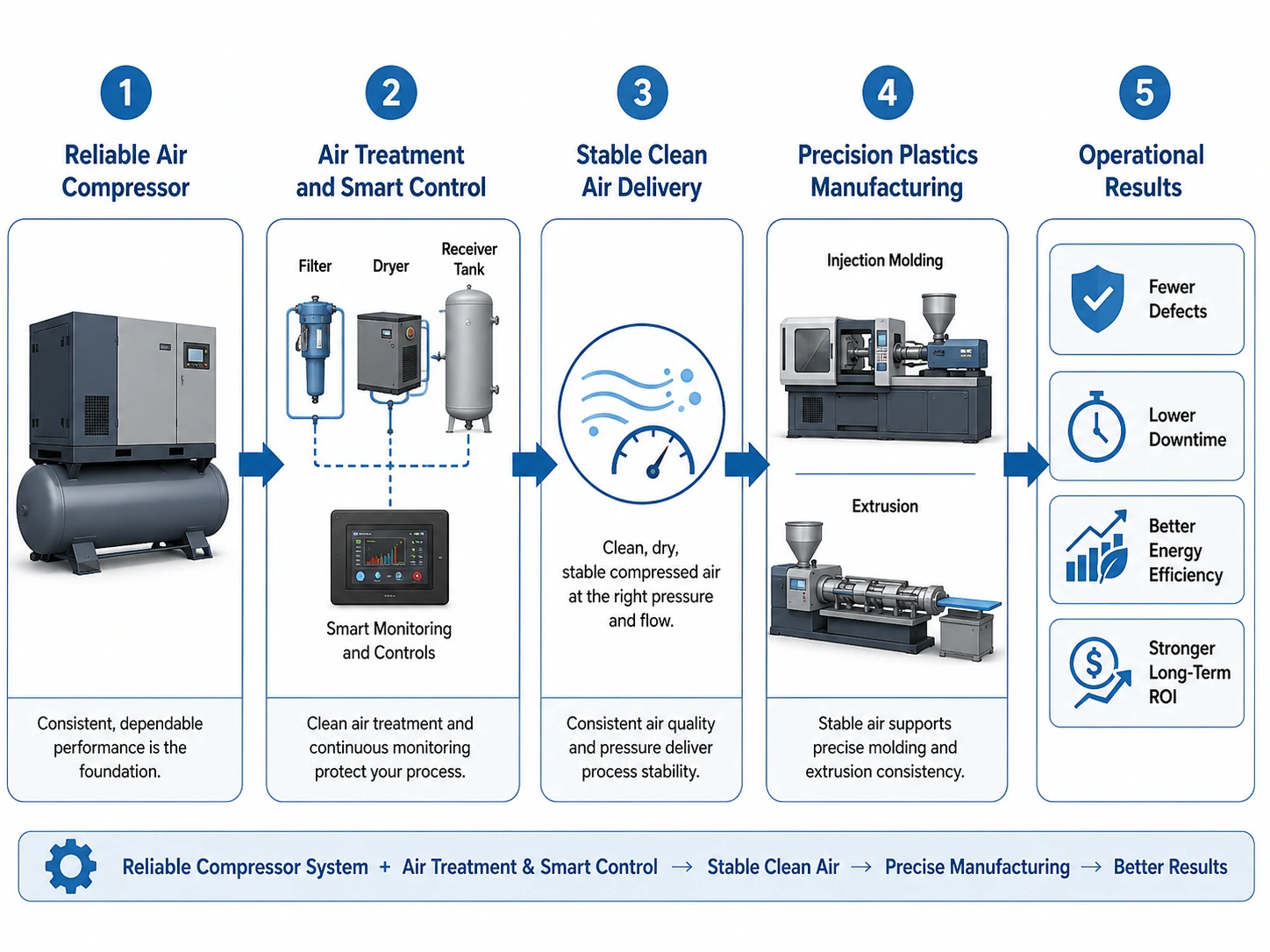
Reliable Compressors Are the Backbone of Precision Plastics Production
Aerospace plastics manufacturing depends on repeatability. If compressed air pressure fluctuates, if air quality drops, or if the system becomes unstable under demand, molding and extrusion performance can suffer quickly. That can lead to voids, warping, dimensional inconsistency, and other quality issues that create waste and force rework.
Reliable compressors help protect against those problems by supporting a cleaner, steadier operating environment. For manufacturers working in high-precision production settings, that reliability helps turn compressed air from a potential weak point into a production asset.
Consistent Air Supply Supports Better Molding and Extrusion Results
Plastics molding and extrusion processes require controlled conditions to perform at a high level. When compressed air remains stable, manufacturers are better positioned to maintain cycle consistency and tighter process control. That translates into more predictable production and fewer disruptions across the line.
Reliable compressed air systems can help improve:
- Molding consistency from cycle to cycle
- Extrusion stability across production runs
- Finished part quality and repeatability
- Scrap and reject reduction
- Confidence in production scheduling
In aerospace manufacturing, where precision cannot be compromised, that level of consistency matters both technically and financially.
Efficiency Gains Come from Better Compressor Technology
Modern compressor systems are designed to do more than simply deliver air. They help improve overall plant efficiency by using energy more effectively and adjusting performance to meet actual demand. Features such as variable speed operation, intelligent controls, and improved filtration can reduce wasted power while maintaining the stable performance critical to aerospace plastics production.
These efficiency gains can help manufacturers achieve:
- Lower electricity consumption
- Improved response to changing demand
- Cleaner compressed air for sensitive applications
- Better overall system optimization
- Reduced operating cost over time
For facilities seeking long-term performance improvements, compressor efficiency is not just a utility concern. It is part of the broader productivity equation.
Reduced Downtime Has a Direct Impact on ROI
Unplanned downtime is one of the most expensive risks in aerospace plastics manufacturing. A compressor failure can halt molding or extrusion operations, delay deliveries, create maintenance pressure, and increase operating cost far beyond the repair itself. That is why reliability remains one of the strongest drivers of long-term ROI.
By investing in dependable compressor systems, manufacturers can reduce:
- Unexpected production stoppages
- Emergency maintenance events
- Reactive troubleshooting time
- Schedule disruptions and output loss
- Avoidable repair and labor costs
For business leaders and operations teams, the financial case is clear. Reliable compressor performance helps protect uptime, and protected uptime supports profitability.
Longer Equipment Life Cycles Strengthen Total Value
Long-term ROI is not based only on immediate performance. It also depends on how long a compressor continues to deliver reliable service. Systems that run efficiently, remain stable, and avoid repeated breakdowns tend to produce better lifecycle value than equipment that appears less expensive upfront but creates ongoing maintenance and replacement pressure.
Extended equipment life cycles can help improve total value by supporting:
- Lower replacement frequency
- Reduced emergency repair exposure
- More predictable maintenance planning
- Greater return on the original capital investment
- Improved total cost of ownership
This is why aerospace manufacturers should evaluate compressor systems based on long-term operating value, not just purchase price.
Air Quality, Smart Monitoring, and Sustainability Matter Too
In aerospace plastics manufacturing, compressed air quality plays an important role in protecting material properties and maintaining process integrity. Oil-free designs and advanced filtration help support cleaner air where contamination could negatively affect production. At the same time, smart monitoring systems allow maintenance teams to track performance, identify inefficiencies, detect leaks, and optimize system usage before problems grow larger.
These capabilities also support sustainability goals. Compressors that operate efficiently consume less energy, reduce waste, and help manufacturers lower emissions associated with power use. That combination of cleaner performance and better system visibility adds value beyond day-to-day reliability.
Reliability Is a Strategic Advantage in Aerospace Plastics Manufacturing
When compressed air systems operate reliably, the benefits extend across the operation. Manufacturers gain more stable molding and extrusion, lower downtime, improved energy performance, cleaner air quality, and stronger lifecycle value. Together, those outcomes help create a more productive, more resilient manufacturing environment.
That is why compressor reliability should be viewed as more than a maintenance priority. In aerospace plastics manufacturing, it is a strategic advantage that supports both operating efficiency and long-term financial performance.
What to Look for in a Compressor System
When selecting compressor equipment for aerospace plastics manufacturing, reliability and efficiency should remain central to the decision. Manufacturers should evaluate not only whether a system can meet air demand, but whether it can do so consistently, efficiently, and with manageable maintenance requirements over time.
Important considerations often include:
- Consistent clean air supply for molding and extrusion
- Energy-efficient controls and system design
- Air treatment and filtration performance
- Ease of service and preventive maintenance support
- Monitoring features that improve visibility and control
- Total lifecycle cost rather than upfront price alone
For facilities evaluating dependable compressed air infrastructure, Southeast Turbo Machinery Equipment offers industrial compressor solutions designed to support demanding applications. For broader process needs involving fluid handling and rotating equipment, the company also provides industrial pump solutions.
The Bottom Line
From molding and extrusion to air quality control and smart monitoring, air compressors play a central role in keeping aerospace plastics manufacturing efficient and consistent. Systems that deliver clean, stable compressed air help reduce waste, lower energy use, minimize downtime, and improve process control across the line. In an industry where precision and consistency are non-negotiable, compressor performance has a direct effect on both operational stability and long-term ROI.
If your current system is contributing to production bottlenecks, excessive energy use, or avoidable maintenance issues, it may be time to reassess whether the equipment is aligned with your process demands. To discuss your application and identify compressor solutions built for efficiency, reliability, and long-term value, connect with Southeast Turbo Machinery Equipment through the contact page.
Frequently Asked Questions
Why are reliable air compressors important in aerospace plastics manufacturing?
Reliable air compressors are important because they provide the stable, clean compressed air needed to support precision molding, extrusion consistency, and reduced production disruption.
How do compressors affect ROI in aerospace plastics operations?
Compressors affect ROI by influencing downtime, maintenance cost, energy consumption, scrap reduction, and equipment life cycle value across the manufacturing process.
What compressor features help improve efficiency?
Features such as variable speed control, intelligent monitoring, advanced filtration, and efficient system design can help improve energy performance and operating stability.
Why is compressed air quality important for aerospace plastics?
Compressed air quality is important because contamination can affect material performance, process consistency, and finished part quality in precision aerospace plastics applications.
What should manufacturers consider when selecting a compressor system?
Manufacturers should consider reliability, clean air delivery, energy efficiency, serviceability, monitoring capabilities, and long-term total cost of ownership.
