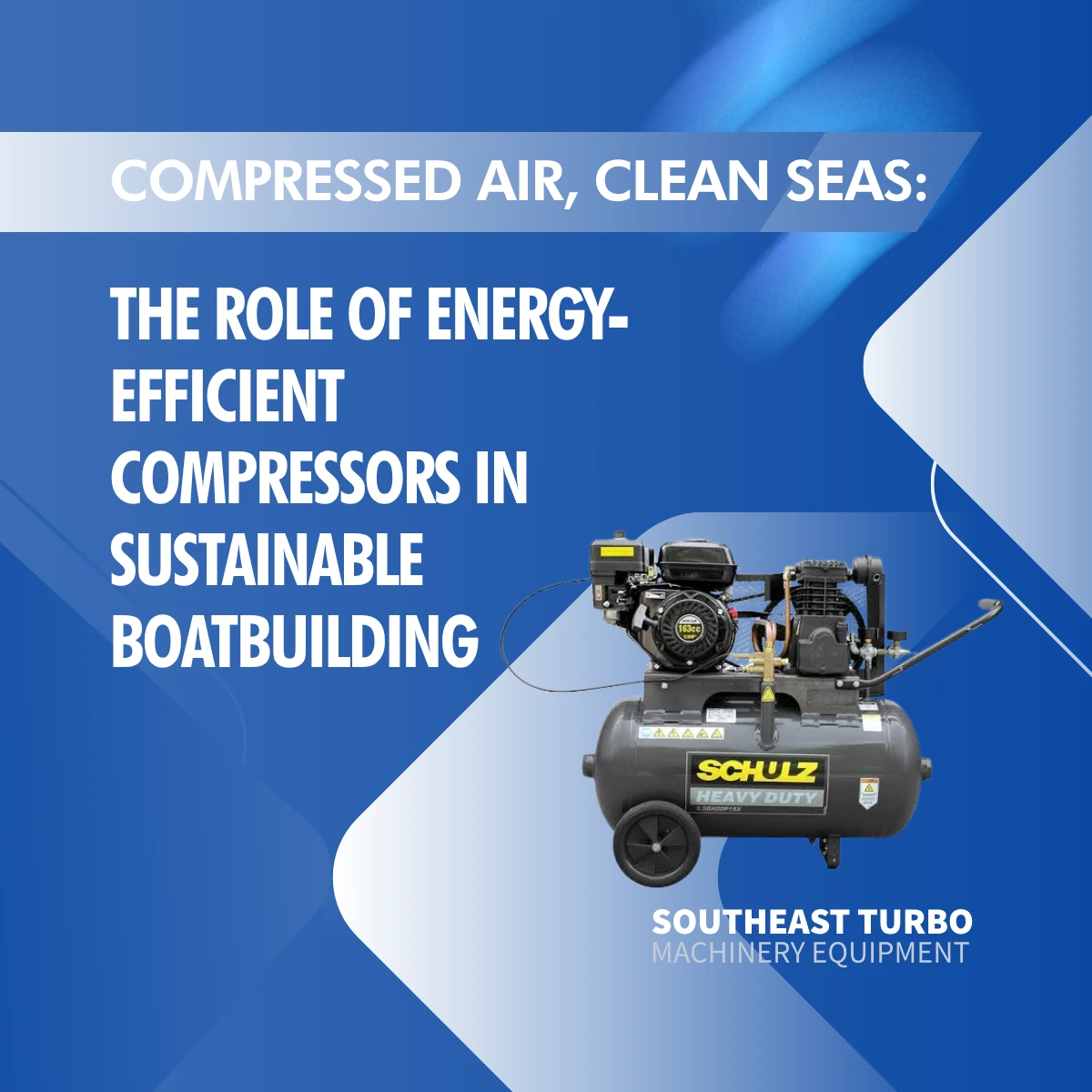
In Florida boatbuilding, compressed air supports many of the daily processes that keep production moving. From surface preparation and coating work to pneumatic tool operation, compressor performance affects efficiency, finish quality, maintenance demands, and operating cost. For shipyards building luxury yachts under strict schedules, energy-efficient compressor systems can help reduce wasted power, improve air quality, and support more reliable production. When compressed air is treated as a strategic utility instead of a background system, it becomes easier to improve both process control and long-term operating performance.
Energy-efficient compressors support sustainable boatbuilding by delivering compressed air more reliably while using less electricity, reducing waste tied to poor air quality, and helping shipyards maintain cleaner, more consistent operations. In practical terms, the right compressor system can lower operating costs, reduce downtime, improve results in blasting and spray finishing, and support cleaner production practices across the facility.
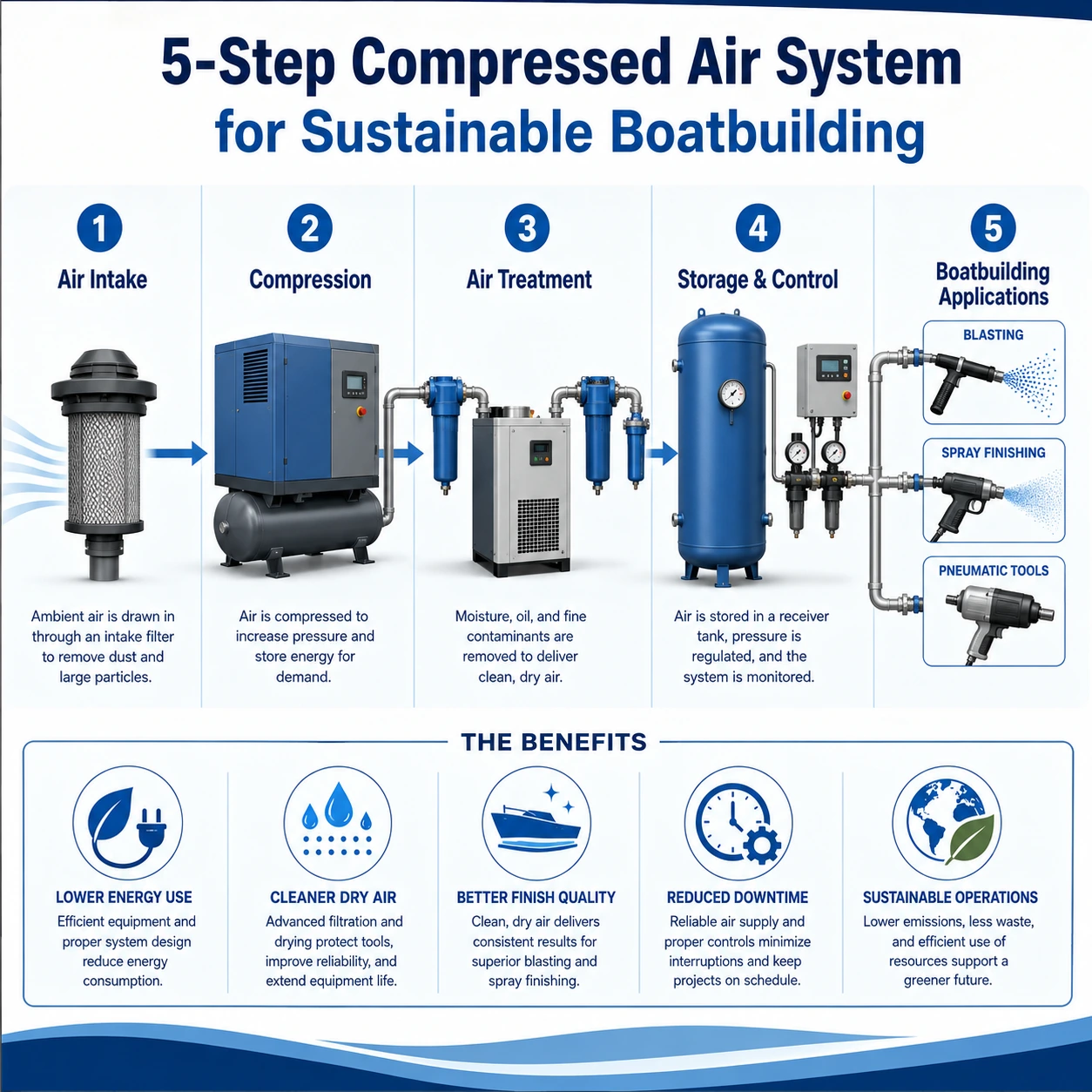
Compressed air is built into many of the processes that support yacht fabrication and finishing. Shipyards depend on it to power tools, support coating operations, and help maintain production flow across demanding work environments. When the air system is unreliable, the consequences can ripple through multiple departments at once. Pressure drops, moisture contamination, excess heat, and unplanned outages do not just affect equipment performance. They affect schedules, labor efficiency, and finished quality.
For operations evaluating dependable compressed air infrastructure, Southeast Turbo Machinery Equipment provides industrial compressors and compressed air systems with an application-driven approach built around rotating equipment performance.
Older or poorly matched compressor systems often create recurring problems for maintenance teams, engineers, and operations leaders. These issues can be easy to normalize over time, but they often carry a high hidden cost.
Common day-to-day concerns include:
In yacht production, where delivery timing and finish standards both matter, those issues can become more than maintenance annoyances. They can become production liabilities.
Modern compressor systems are designed to deliver air more efficiently and with better control. Instead of running inefficiently under changing load conditions, advanced designs can align air supply more closely with actual demand. That helps reduce wasted power while supporting more stable system performance.
Energy-efficient compressor systems can help shipyards achieve:
That makes efficiency more than an energy story. It becomes a reliability and process-quality story as well.
In yacht fabrication, surface preparation and paint application are among the most quality-sensitive stages of production. Compressed air that carries excess moisture, oil, or contaminants can create problems that show up immediately in the finish or later in the rework budget. Paint defects, inconsistent spray performance, and tool reliability problems often trace back to air quality issues rather than the visible application equipment alone.
Well-designed compressed air systems help support:
That is especially important in luxury yacht production, where appearance is part of the product value.
Pneumatic tools remain essential in many shipyard operations, but their performance depends on stable, adequately supplied compressed air. If the system cannot maintain pressure or respond well to changing demand, crews may deal with reduced tool effectiveness, inconsistent performance, or frequent interruptions.
More reliable compressed air systems can help improve:
In facilities where multiple air-dependent processes operate at once, those improvements can add up quickly.
For shipyards focused on cleaner operations, compressed air efficiency is an important place to start. Compressors that consume less energy help reduce the overall electrical burden of the facility. Systems that deliver cleaner air can also help reduce waste associated with poor finishing outcomes, premature tool wear, or avoidable process disruptions.
In that sense, energy-efficient compressors support sustainability in several ways:
For many shipyards, these gains support both compliance expectations and broader operational reputation.
While sustainability and energy savings matter, the most immediate benefit of a better compressor system is often reliability. Shipyards cannot afford to have blasting operations stall, paint systems underperform, or pneumatic tools lose pressure in the middle of production. Every interruption affects labor, timelines, and production confidence.
Reliable compressor systems help reduce those risks by supporting:
That is why compressed air should be evaluated as a core production asset rather than a simple utility purchase.
When selecting or upgrading a compressor system, shipyards should look beyond nameplate capacity alone. The right solution depends on how the equipment will actually be used, how the air must be treated, and how important uptime is across the production environment.
Key evaluation factors often include:
For operations that also rely on fluid transfer and other rotating equipment applications, Southeast Turbo Machinery Equipment provides industrial pump solutions to support demanding process needs as well.
In Florida boatbuilding, energy-efficient compressors support more than lower utility bills. They help shipyards maintain cleaner air, protect coating quality, improve tool performance, and reduce downtime across critical production processes. When the compressed air system is properly matched to the application, the result is a more efficient, more reliable, and more sustainable operation.
If your current system is contributing to high energy costs, unstable air supply, moisture problems, or avoidable production interruptions, it may be time to reassess whether the equipment is aligned with your process demands. To discuss your application and identify compressed air solutions built for long-term performance, connect with Southeast Turbo Machinery Equipment through the contact page.
Compressors are important because they supply the compressed air needed for blasting, spray finishing, pneumatic tools, and other essential production processes in boatbuilding environments.
Energy-efficient compressors reduce operating costs by using electricity more effectively, matching air supply more closely to demand, and helping lower waste tied to inefficient system performance.
Compressed air quality matters for spray painting because moisture, oil, and other contaminants can affect coating consistency, create finish defects, and increase material waste or rework.
Outdated compressors can contribute to high energy bills, overheating, unstable pressure, moisture contamination, excessive noise, and unplanned downtime that disrupts production.
Shipyards should consider total air demand, air quality requirements, efficiency under varying loads, reliability, maintenance accessibility, and how the system supports overall production goals.

