
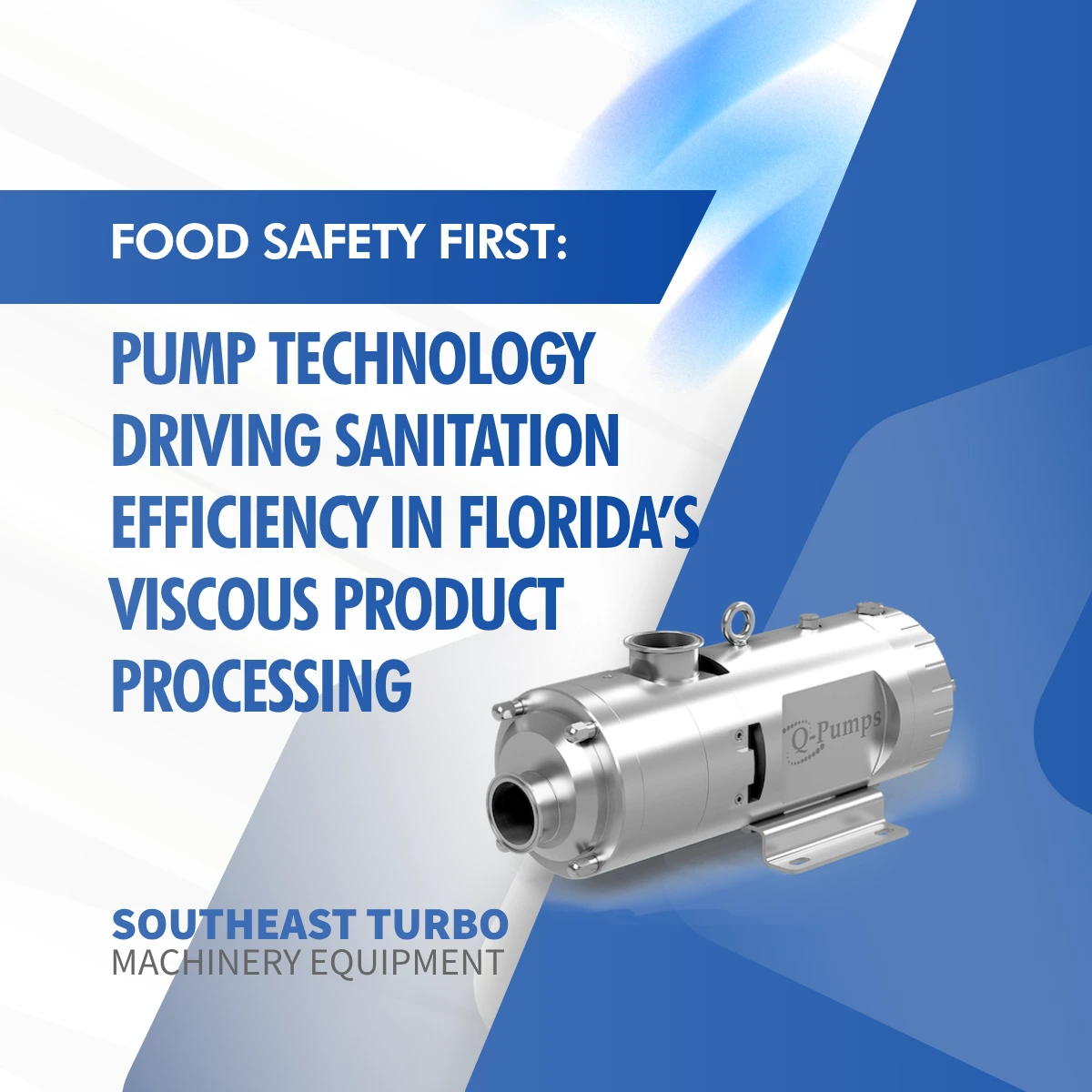
In Florida food manufacturing, processors handling chocolate, syrups, sauces, oils, nut butters, creams, and other viscous products face a difficult balance: protect product quality, maintain sanitation standards, and keep production moving efficiently. Pump selection plays a direct role in that balance. The right pump system supports hygienic design, consistent transfer, reliable cleaning, and reduced product waste across demanding processing environments.
What Does Pump Technology Do for Food Safety in Viscous Product Processing?
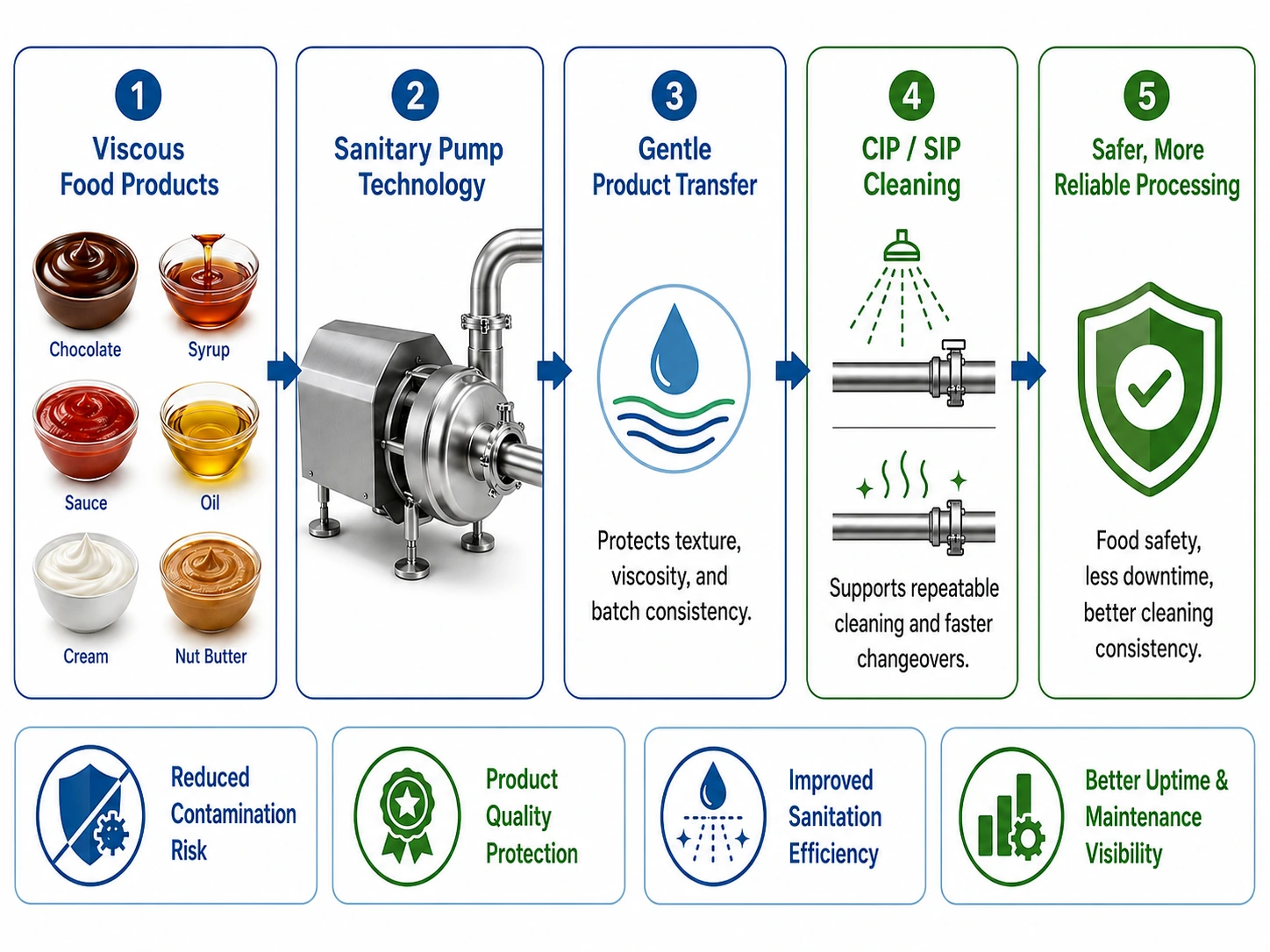
Pump technology supports food safety in viscous product processing by moving thick products gently, reducing contamination risk, improving cleanability, and helping plants maintain consistent sanitation procedures. In practical terms, a properly selected sanitary pump helps processors protect texture and product integrity while making routine cleaning and production changeovers more controlled and repeatable.
Key Takeaways
- Sanitary pump design helps reduce contamination risk in viscous food processing operations.
- Gentle product handling is essential for protecting texture, consistency, and batch quality.
- Stainless construction and hygienic materials support repeated washdown and chemical exposure.
- CIP and SIP-compatible systems can reduce labor demands while improving cleaning consistency.
- Monitoring and maintenance visibility help processors avoid unplanned downtime and sanitation-related disruptions.
Why Pump Selection Matters in Hygienic Food Processing
In viscous product applications, pumps do more than transfer material from one point to another. They influence shear levels, residence time, cleanability, temperature stability, and the ability to maintain sanitary conditions during normal operation and product changeovers. When a pump is poorly matched to the application, the result can be product degradation, difficult cleanup, excessive maintenance, or inconsistent throughput.
That is why food processors often need pump systems that combine hygienic construction with application-specific performance. For operations evaluating sanitary transfer equipment and processing support, Southeast Turbo Machinery Equipment offers industrial pump solutions for demanding process applications.
Gentle Handling Protects Product Quality
Many viscous food products are sensitive to excessive mechanical stress. If a pump introduces too much shear, processors may see changes in texture, emulsion stability, appearance, or finished-product consistency. That can create waste, rework, and avoidable process variability.
For products such as creams, sauces, syrups, fillings, and oils, pump technology should be selected with product sensitivity in mind. A well-matched pump can help maintain:
- Consistent viscosity through the transfer process
- Desired texture and mouthfeel
- Stable appearance and batch uniformity
- Reduced product loss during startup and changeover
Protecting product integrity is not only a quality issue. It also supports food safety by minimizing process disruptions and helping plants maintain predictable operating conditions from batch to batch.
Sanitary Construction Supports Reliable Cleaning
Food plants rely on equipment that can stand up to aggressive cleaning routines without compromising hygienic performance. In viscous processing environments, pumps are routinely exposed to washdown procedures, cleaning agents, and operating conditions that demand durable, corrosion-resistant materials.
Sanitary pump systems are commonly chosen for features such as:
- Stainless steel product-contact surfaces
- Smooth internal geometries that reduce residue buildup
- Materials that tolerate repeated chemical cleaning exposure
- Designs that support disassembly or in-place cleaning as required
These design considerations matter because sanitation problems often begin where product accumulates, cleaning is inconsistent, or equipment materials do not hold up over time. Durable hygienic construction helps processors maintain safer conditions while controlling maintenance frequency and replacement costs.
How CIP and SIP Improve Sanitation Efficiency
Clean-in-place (CIP) and sterilize-in-place (SIP) strategies can significantly improve sanitation efficiency when pump systems are designed to support them. Instead of requiring frequent teardown for routine cleaning, processors can standardize wash cycles and reduce manual intervention.
This matters for operations facing labor constraints, aggressive production schedules, or frequent changeovers. In the right application, CIP/SIP-capable systems can help deliver:
- More repeatable sanitation procedures
- Less downtime associated with cleaning and reassembly
- Lower dependence on manual cleaning steps
- Reduced risk of variation caused by inconsistent cleaning practices
For many plants, sanitation efficiency is also a throughput issue. Faster, more repeatable cleaning helps support production availability without reducing hygiene expectations.
Digital Visibility Is Becoming More Important
Food processors are placing greater emphasis on system visibility, cleaning verification, and proactive maintenance. As facilities look for ways to strengthen documentation and reduce avoidable downtime, pump systems that support monitoring and performance tracking become more valuable.
Digital visibility can help teams:
- Track operating performance more consistently
- Identify abnormal wear before failure disrupts production
- Improve maintenance planning
- Support sanitation verification and process accountability
While not every application requires advanced controls, the broader direction of food manufacturing is clear: processors want more confidence in how equipment is operating, how it is being cleaned, and when it needs attention.
Balancing Food Safety, Throughput, and Labor Efficiency
Food processing facilities do not have the luxury of focusing on sanitation alone. They also have to manage labor pressures, uptime targets, product consistency, and overall line efficiency. That is why pump technology should be evaluated as part of the full operating picture rather than as an isolated equipment choice.
In viscous product processing, the right pump helps plants balance multiple priorities at once:
- Food safety and contamination control
- Product quality and gentle handling
- Cleaning efficiency and reduced labor burden
- Maintenance reliability and uptime
- Consistent performance across changing production demands
That broader system perspective is especially important for plants reviewing new equipment, process upgrades, or integrated rotating equipment needs. Southeast Turbo Machinery Equipment also supports industrial compressor applications for operations that require dependable utility and process support equipment across the facility.
What to Look for in a Pump for Viscous Food Products
When evaluating pumps for hygienic viscous product handling, processors should look beyond flow rate alone. A better selection process considers sanitation, product sensitivity, maintainability, and long-term operating fit.
Key evaluation factors often include:
- Compatibility with product viscosity and shear sensitivity
- Hygienic design and material selection
- Ease of cleaning and support for CIP/SIP procedures
- Maintenance accessibility and expected service demands
- Reliability under actual operating conditions
- Fit with production goals, changeover frequency, and sanitation requirements
A pump that performs well on paper but creates cleaning complications or quality issues in practice can quickly become an expensive bottleneck.
The Bottom Line
In Florida’s viscous product processing environments, sanitation is directly tied to equipment performance. The right pump technology helps processors protect food safety, preserve product quality, improve cleaning consistency, and support more reliable production. From hygienic construction and gentle handling to CIP/SIP compatibility and improved operational visibility, pump selection has a measurable impact on both plant performance and batch confidence.
If your team is dealing with sanitation challenges, difficult product transfer, or equipment that is not aligned with your process requirements, it may be time to review your current system. To discuss your application, connect with Southeast Turbo Machinery Equipment through the contact page.
Frequently Asked Questions
Why are sanitary pumps important in viscous food processing?
Sanitary pumps are important because they help processors move thick products while reducing contamination risk, supporting cleanability, and protecting product consistency during transfer.
What types of food products need gentle pump handling?
Products such as chocolate, syrups, sauces, creams, oils, and nut butters often benefit from gentle pump handling because their texture, viscosity, or finished quality can be affected by excessive shear.
How do CIP and SIP improve sanitation efficiency?
CIP and SIP improve sanitation efficiency by allowing equipment to be cleaned or sterilized without extensive disassembly, which helps reduce manual labor, shorten cleaning time, and improve consistency between sanitation cycles.
What should processors look for in a pump for hygienic food applications?
Processors should look for hygienic construction, compatibility with product viscosity, support for cleaning procedures, durable materials, and reliable performance under real production conditions.
Can better pump selection help reduce downtime in food plants?
Yes. A properly selected pump can reduce downtime by improving cleanability, minimizing product handling issues, and supporting more predictable maintenance and operating performance.
