In Florida shipyards, composite yacht production depends on precision at every stage of the build. Resin infusion is one of the most important steps because it directly affects structural integrity, finish quality, material consumption, and production efficiency. When pump systems are properly matched to the process, shipyards can reduce resin waste, improve infusion consistency, and keep projects moving with fewer disruptions. For builders working under tight quality and delivery expectations, pump performance is not a minor detail. It is part of the production strategy.
High-performance pumps reduce resin waste by delivering more consistent flow, supporting better control during infusion, minimizing leakage and spills, and improving handling of higher-viscosity composite materials. In practical terms, that means shipyards can use resin more efficiently, reduce defects tied to uneven distribution, and maintain cleaner, more predictable composite manufacturing processes.
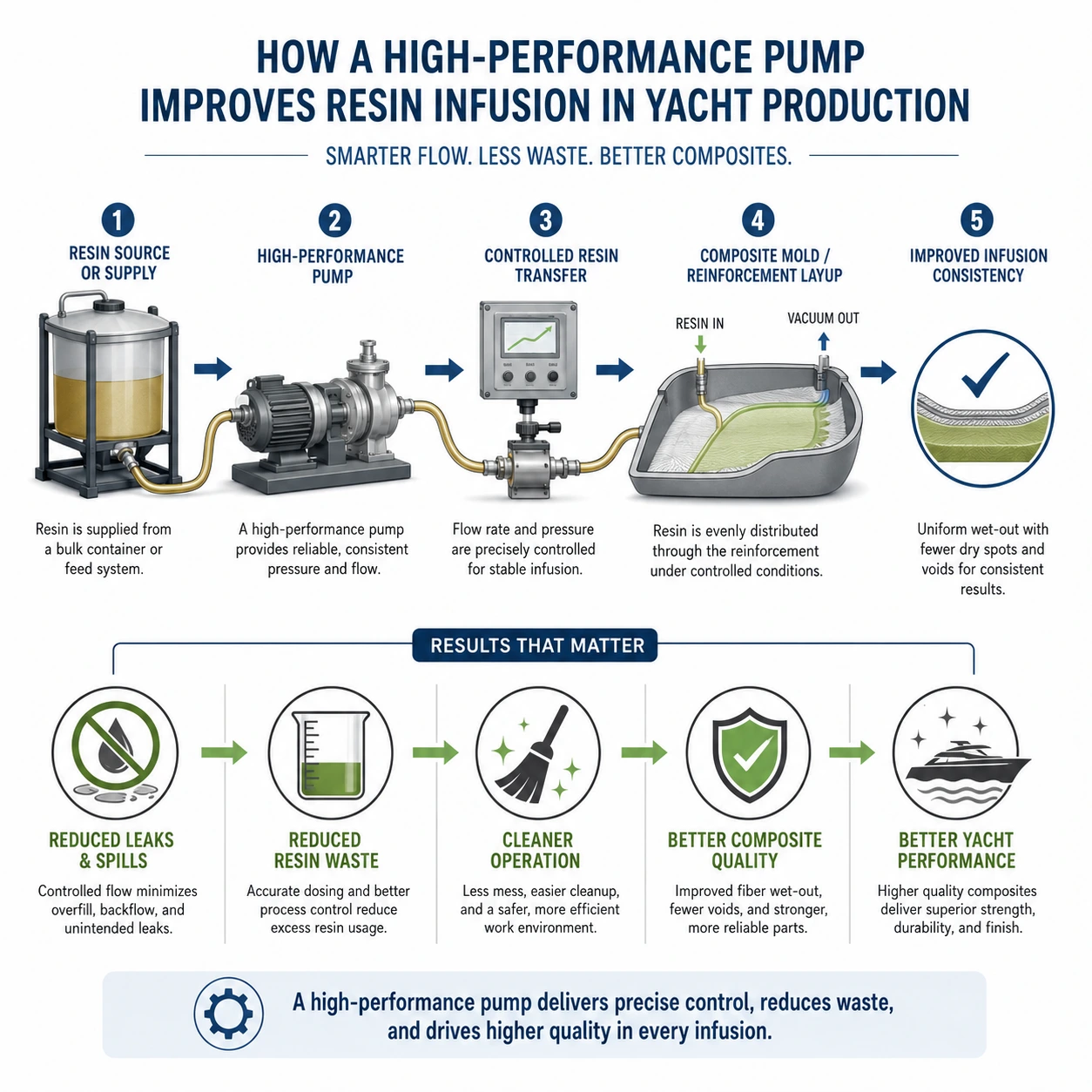
Resin infusion plays a central role in building strong, lightweight composite hulls and structures. Instead of relying on less controlled manual resin application, shipyards use pump-assisted processes to move resin through reinforcement materials more evenly. That helps improve structural consistency while reducing the variability that can affect final quality.
Because resin infusion is such a critical process, the equipment supporting it has to perform reliably under real operating conditions. For shipyards evaluating dependable fluid-handling equipment for demanding applications, Southeast Turbo Machinery Equipment provides industrial pump solutions designed to support efficient, application-specific performance.
Resin waste is more than a material issue. It affects labor, cleanup, process control, environmental management, and overall project cost. In yacht production, where composite builds can involve significant resin volumes, even small inefficiencies can scale into meaningful losses.
Common pump-related contributors to resin waste include:
Reducing these issues starts with improving control at the pump level.
One of the clearest advantages of a high-performance pump system is better control over resin movement. When flow is stable and repeatable, resin can move through reinforcement more evenly, helping reduce process variability and material overuse. That is especially important in large or complex composite structures where uneven distribution can affect both quality and cost.
Better flow control can help shipyards achieve:
For engineering teams, that means a more controllable process. For operations and procurement leaders, it means better material efficiency and fewer surprises during production.
Leaks and spills create immediate waste, but they also create secondary costs through cleanup, downtime, and process disruption. In resin-handling environments, cleaner pump performance is a direct operational advantage. Shipyards that reduce leakage are better positioned to maintain more efficient workflows and avoid unnecessary losses around the infusion process.
Leak-resistant pump configurations can help support:
That combination of cleanliness and control becomes especially valuable when production schedules are tight and material costs are high.
Not all resins behave the same way. Some composite applications require thicker materials that can challenge older or poorly matched pumping systems. When a pump is not suited to the resin’s viscosity or flow characteristics, the result may be pulsation, inconsistent transfer, avoidable waste, or difficulty maintaining stable infusion conditions.
That is why application fit matters. Pump selection should account for:
A pump that is well matched to the material helps support smoother infusion and more efficient overall resin use.
Lower resin waste is one of the clearest benefits of better pump performance, but it is not the only one. More reliable fluid handling can also improve labor efficiency, reduce rework, and help builders keep projects on schedule. In yacht production, where build quality and timeline discipline both matter, these operational improvements have real value.
Shipyards that improve pump performance may also see benefits such as:
For shipyards focused on reducing waste and improving environmental performance, material efficiency is an important part of the equation. Every reduction in resin loss helps limit disposal requirements and supports cleaner operations overall. High-performance pumps contribute by helping shipyards use materials more effectively and minimize spills, leaks, and excess handling.
That makes pump performance relevant not only to production efficiency, but also to how shipyards manage waste, maintain cleaner facilities, and support broader operational responsibility goals.
When selecting pumps for composite resin processes, shipyards should evaluate more than basic capacity. The right system should reflect the realities of the material, the build process, and the expected operating demands.
Key evaluation factors often include:
For facilities that also require dependable rotating equipment support elsewhere in the operation, Southeast Turbo Machinery Equipment provides industrial compressor systems for a range of demanding industrial applications.
In Florida yacht production, resin infusion efficiency depends heavily on pump performance. High-performance pumps help shipyards reduce resin waste, improve process consistency, support cleaner operations, and maintain better control over composite manufacturing. When the pumping system is properly aligned with the application, it becomes easier to manage cost, quality, and production reliability at the same time.
If your current setup is contributing to wasted resin, inconsistent infusion performance, or avoidable downtime, it may be time to review whether the system is truly matched to the job. To discuss your application and identify fluid-handling solutions built for efficiency and long-term performance, reach out through the contact page.
High-performance pumps are important because they help control resin flow more consistently, reduce waste, and support better infusion quality in composite manufacturing processes.
Pumps help reduce resin waste by improving flow control, limiting leaks and spills, and supporting more even resin distribution through composite materials.
Poor pump performance can contribute to uneven resin transfer, material waste, leaks, cleanup issues, process instability, and defects that increase rework or reduce composite quality.
Shipyards should consider resin viscosity, flow consistency, leak resistance, maintenance requirements, reliability, and how well the pump fits the overall infusion process.
Yes. Better pump systems can support sustainability by reducing resin waste, improving material efficiency, and helping shipyards maintain cleaner, more controlled operations.

