
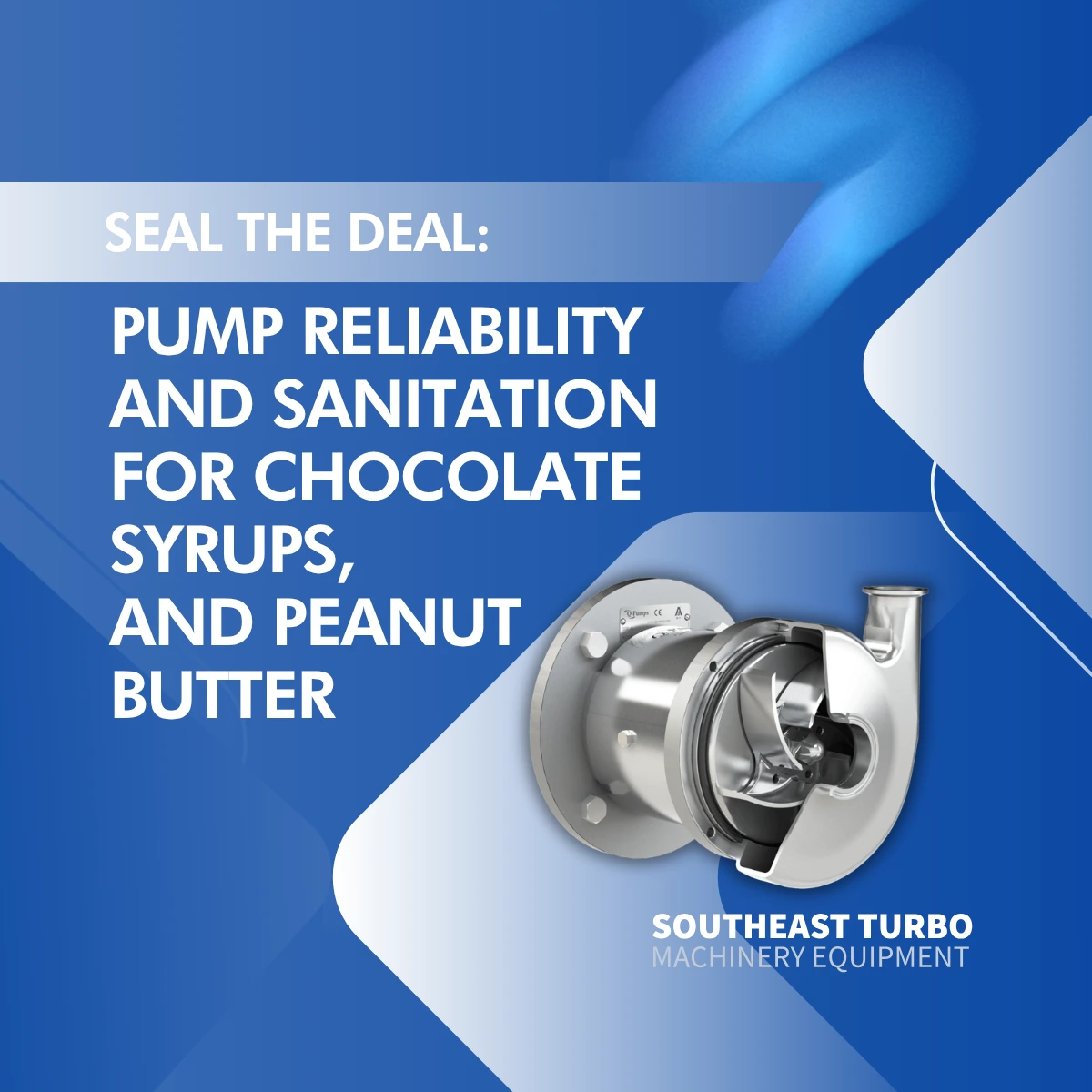
In viscous food processing, pump performance is only as dependable as the sealing system behind it. For products such as chocolate, syrups, and peanut butter, seals play a direct role in contamination prevention, cleanability, leak control, and maintenance efficiency. When seal selection is treated as a core process decision instead of a minor component choice, food processors are better positioned to protect sanitation standards while keeping production reliable.
Why Are Pump Seals So Important in Viscous Food Processing?
Pump seals are critical in viscous food processing because they help prevent leakage, limit contamination risk, support easier cleaning, and improve equipment reliability. In applications involving sticky, thick, or buildup-prone products, the wrong seal can increase product loss, extend sanitation time, and create avoidable maintenance problems. The right seal design helps processors keep systems cleaner, more dependable, and easier to maintain.
Key Takeaways
- Seal performance has a major impact on sanitation, leak prevention, and pump reliability.
- Viscous products such as chocolate, syrups, and peanut butter place added stress on pump sealing systems.
- Hygienic seal designs can help reduce residue buildup and improve cleanability.
- Easier-to-maintain sealing systems can reduce downtime and simplify service routines.
- Choosing the right pump and seal configuration supports both food safety and long-term operating efficiency.
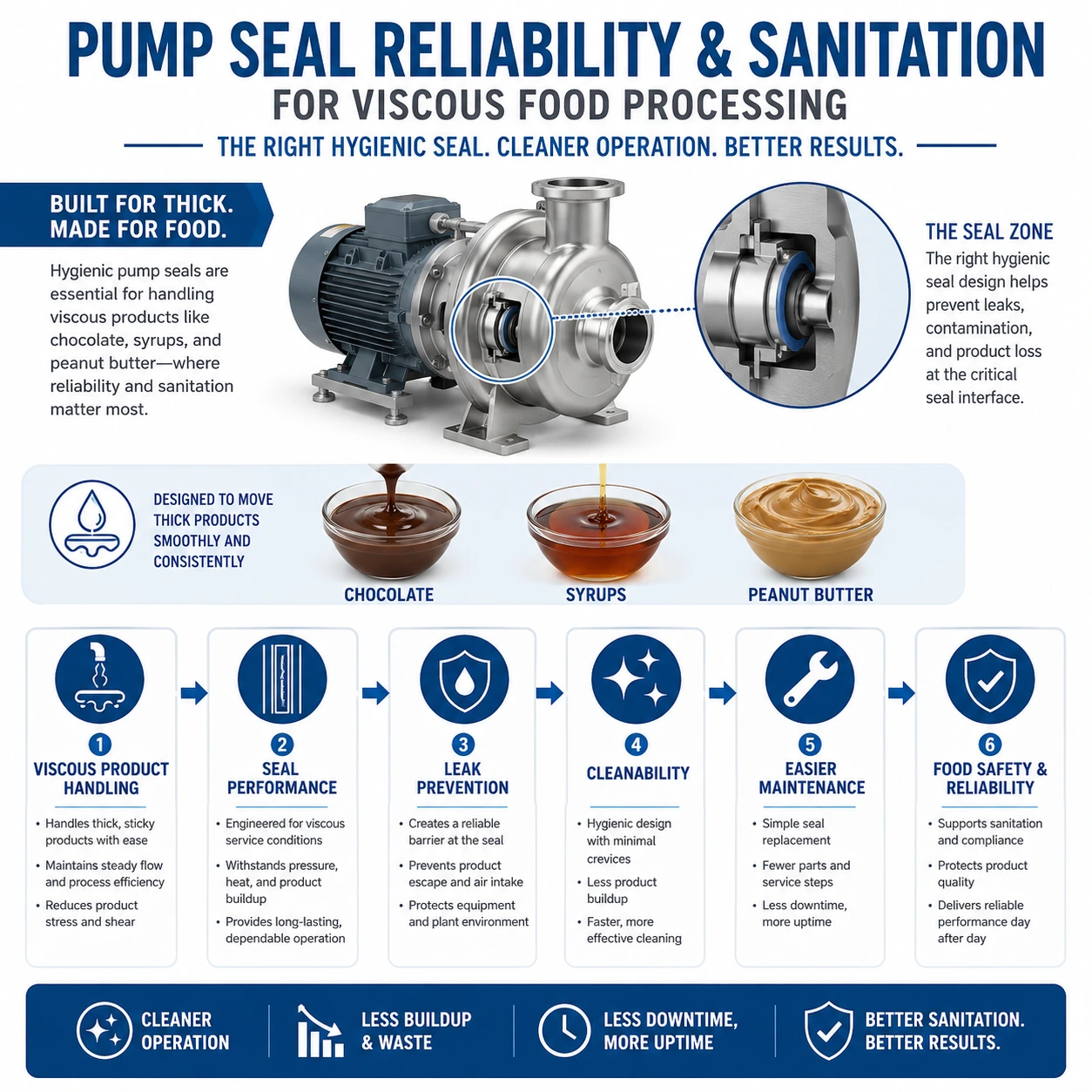
The Challenge of Sealing Thick, Sticky Food Products
Chocolate can harden, syrups can crystallize, and peanut butter can cling to internal surfaces. Those conditions create real challenges for pump systems, especially at the seal point. If seals are not well suited to the product and sanitation requirements, processors may encounter leakage, product buildup, hard-to-clean residue, or recurring service issues.
That is why sealing systems should be evaluated based on actual operating conditions, not just general pump compatibility. For processors reviewing hygienic equipment options for demanding applications, Southeast Turbo Machinery Equipment provides application-driven industrial pump solutions for food and process environments where cleanability and reliability matter.
Mechanical Seals vs. Hygienic Seals
Not every seal design performs the same way in food processing. While mechanical seals are widely used across general industry, food applications involving viscous products often demand a more sanitation-focused approach.
Mechanical Seals
Mechanical seals are commonly used to control leakage in rotating equipment. In many industrial environments, they provide dependable sealing performance. However, in sanitary food applications, they may introduce cleaning challenges if the configuration allows residue to remain in areas that are harder to access or fully clean.
Hygienic Seals
Hygienic seals are intended for applications where sanitation is a primary concern. These designs typically emphasize smooth surfaces, reduced product hold-up, and easier cleanability. For viscous food products, that can make a meaningful difference in contamination control, washdown effectiveness, and process confidence.
For processors working under strict food safety expectations, hygienic sealing solutions often provide a stronger fit when cleanability and sanitary performance are central requirements.
Cleanability Is More Than a Sanitation Benefit
In food production, cleanability affects much more than hygiene. It also affects labor time, line availability, changeover speed, and overall operating efficiency. A seal design that traps product or complicates washdown can turn routine sanitation into a recurring production bottleneck.
Improved cleanability can help processors:
- Reduce residue buildup between runs
- Shorten washdown and cleaning time
- Support more consistent sanitation procedures
- Lower the risk of contamination tied to product hold-up
- Improve turnaround between different product batches
That makes seal selection part of the broader process-efficiency conversation, not just a maintenance detail.
Ease of Maintenance Supports Better Uptime
Reliability does not depend only on how long a seal lasts. It also depends on how easy the seal is to inspect, service, and replace when maintenance is required. In many food plants, complicated seal replacement procedures increase the chance of installation errors, prolong downtime, and put added pressure on maintenance teams.
Sealing systems that are easier to service can provide several practical advantages:
- Faster replacement during planned maintenance
- Reduced risk of incorrect reassembly
- Less downtime tied to service procedures
- Better consistency in pump performance after maintenance
For viscous applications that already place significant demands on pumping equipment, maintenance simplicity is a meaningful operational advantage.
How Seal Selection Affects Food Safety
Seals serve as a critical barrier between product integrity and process failure. If leakage occurs, if residue remains in difficult-to-clean areas, or if frequent service interrupts sanitary control, the entire production process becomes harder to manage. In products like chocolate, syrups, and peanut butter, where viscosity increases the likelihood of buildup, sealing performance directly influences sanitation outcomes.
The right seal choice helps processors support:
- Leak prevention
- Reduced contamination exposure
- More effective cleaning procedures
- Stronger confidence in hygienic process control
- Better alignment between equipment design and food safety expectations
What Food Processors Should Evaluate Before Choosing a Seal
Seal selection should reflect the realities of the product, the cleaning process, and the operating environment. A good fit for one application may not perform well in another, especially when product viscosity, sanitation requirements, or maintenance expectations differ.
Before selecting a pump and seal arrangement, processors should evaluate:
- Product viscosity and tendency to harden, crystallize, or cling to surfaces
- Sanitation requirements and cleaning frequency
- Cleanability of the overall pump configuration
- Ease of seal inspection and replacement
- Leakage history and recurring service issues
- Expected uptime requirements and maintenance resources
Where the application includes additional rotating utility equipment, Southeast Turbo Machinery Equipment also supports industrial compressor systems for demanding process operations.
The Bottom Line
For chocolate, syrups, peanut butter, and other viscous food products, seal selection has a direct effect on sanitation, maintenance, and pump reliability. When the seal is properly matched to the application, processors can reduce leakage risk, improve cleanability, simplify service, and support more consistent food-safe performance across the line.
If your current equipment is creating buildup, recurring seal problems, or avoidable downtime, it may be time to take a closer look at the sealing approach in your pump system. To discuss your application and identify solutions built for cleanability and long-term performance, connect with Southeast Turbo Machinery Equipment through the contact page.
Frequently Asked Questions
Why are pump seals important in chocolate, syrup, and peanut butter processing?
Pump seals are important because they help prevent leakage, reduce contamination risk, support sanitation, and improve reliability in applications involving thick, sticky food products.
What is the difference between mechanical seals and hygienic seals?
Mechanical seals are widely used in industrial equipment for leakage control, while hygienic seals are designed with sanitation and cleanability in mind for food and beverage processing applications.
How does seal design affect cleanability?
Seal design affects cleanability by influencing how much product residue can collect around the sealing area and how easily the pump can be washed down or cleaned between production runs.
Can better seal selection reduce downtime?
Yes. A seal that is easier to maintain and better suited to the application can reduce downtime by lowering the frequency of leaks, simplifying service, and improving overall pump reliability.
What should food processors consider when choosing a pump seal?
Food processors should consider product viscosity, sanitation requirements, cleanability, maintenance access, leakage risk, and how the seal performs under real operating conditions.
