
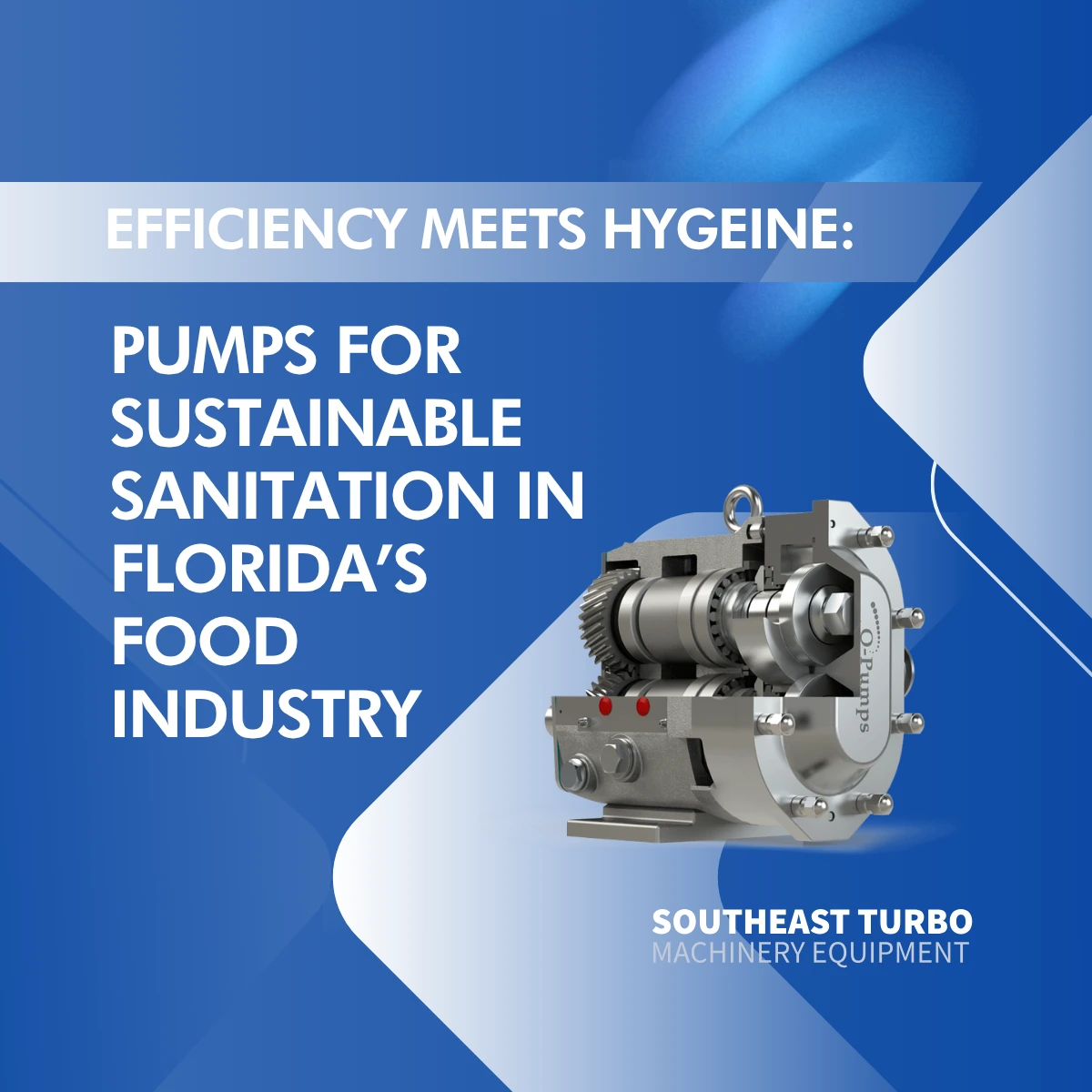
Florida food processors operate under constant pressure to protect product quality, maintain hygienic conditions, reduce downtime, and control operating costs. For facilities handling viscous products such as sauces, syrups, creams, fruit concentrates, and similar materials, pump performance has a direct impact on all four. The right pump does more than move product. It supports sanitation efficiency, protects consistency, lowers resource use, and helps plants run cleaner, more reliable operations.
What Do Pumps Do for Sustainable Sanitation in Food Processing?
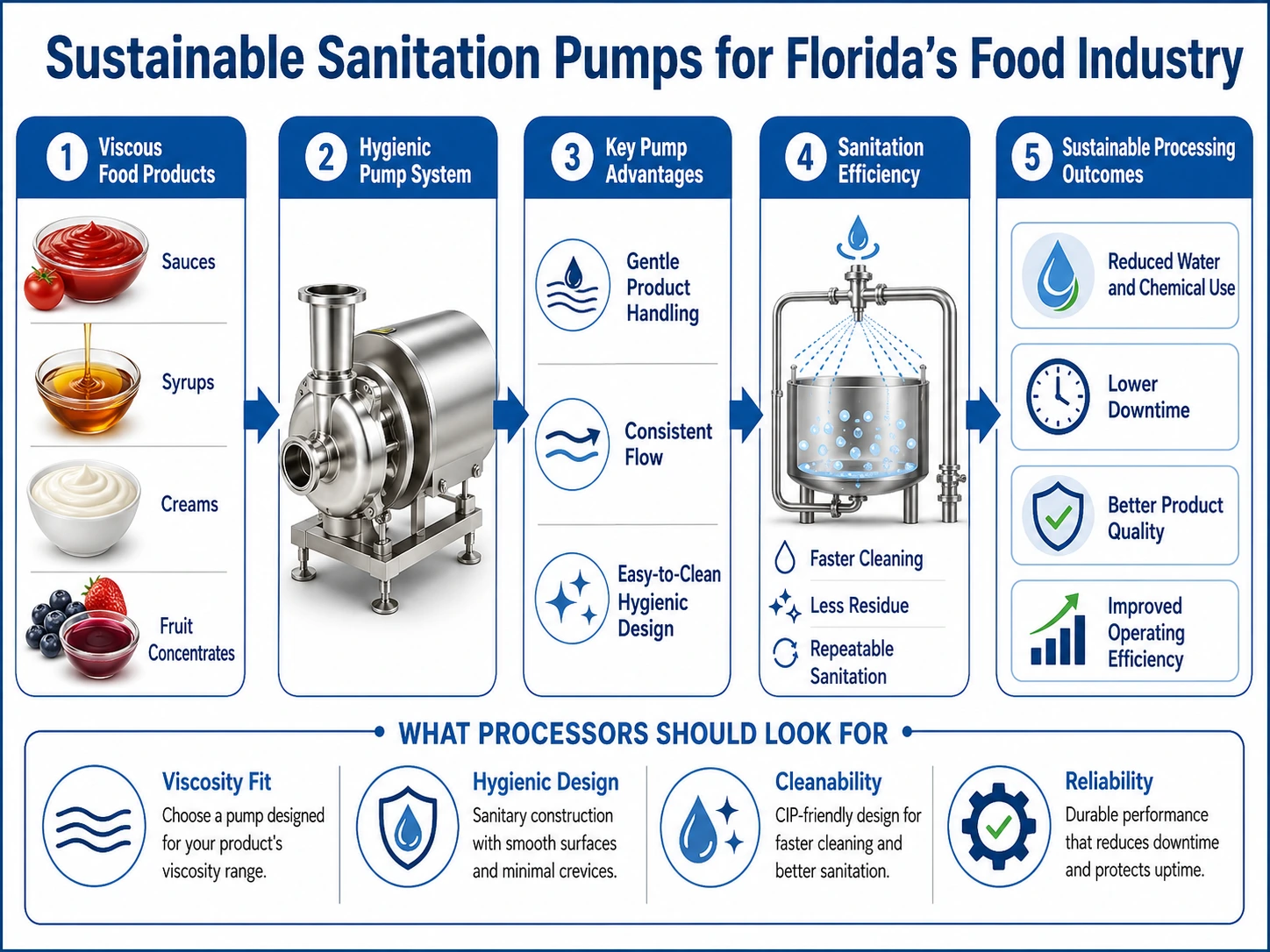
Pumps support sustainable sanitation by moving viscous food products efficiently while making systems easier to clean, reducing wasted water and chemicals, and helping processors maintain hygienic conditions without sacrificing throughput. In practical terms, a properly selected pump can improve product handling, shorten clean-down routines, and support more efficient day-to-day operation across the line.
Key Takeaways
- Pumps designed for viscous food products help improve flow consistency and reduce process disruptions.
- Hygienic pump construction supports easier cleaning and lowers contamination risk.
- Energy-efficient pump designs can reduce operating costs in food processing environments.
- Clean-in-place strategies can help lower water and chemical usage while improving sanitation consistency.
- Pump selection affects not just hygiene, but also uptime, labor efficiency, and long-term process sustainability.
Why Pump Selection Matters in Florida Food Processing
In food plants, sanitation and productivity are closely connected. If a pump struggles with thick product, creates excessive residue, or requires lengthy cleaning procedures, the result is often more downtime, more labor, and more operational waste. That is especially important in Florida processing environments where product quality, food safety, and efficient production schedules all need to be maintained at the same time.
For operations evaluating sanitary pumping equipment for demanding applications, Southeast Turbo Machinery Equipment provides industrial pump solutions for a wide range of processing needs.
Pumps Built for Viscous Products Improve Process Efficiency
Viscous products present a different challenge than thin liquids. They can be harder to move, more sensitive to shear, and more likely to leave residue behind if equipment is not properly matched to the application. When the wrong pump is used, processors may see inconsistent flow, product degradation, excess energy use, or extended cleaning cycles.
Modern pump systems designed for viscous products help address those issues by supporting:
- Smoother product transfer through the process
- More consistent flow under changing production demands
- Reduced product waste caused by transfer inefficiency
- Better protection of texture, consistency, and finished quality
That kind of predictable performance matters in applications where both product integrity and sanitation efficiency influence profitability.
Energy Efficiency Matters in Hygienic Operations
Food processors are not just evaluating pumps on flow rate. They are also looking at how equipment affects overall operating cost. Energy-efficient pump design can help reduce utility expense while supporting reliable production. In facilities running continuously or on tight schedules, even modest efficiency gains can become meaningful over time.
When a pump is appropriately sized and designed for the product being handled, plants are better positioned to avoid unnecessary energy consumption tied to recirculation, poor flow control, or mechanical inefficiency. That makes energy performance part of the broader sanitation and sustainability conversation, not a separate issue.
Hygienic Design Reduces Cleaning Risk
Sanitation is non-negotiable in food manufacturing. Pumps used in these environments need to support thorough cleaning and reduce the chance of product hold-up or bacterial growth. Hygienic designs help processors maintain cleaner systems by limiting hard-to-clean areas and supporting more repeatable sanitation procedures.
Important hygienic features often include:
- Smooth product-contact surfaces
- Materials suited for food-grade sanitation environments
- Designs that reduce unnecessary crevices or residue traps
- Configurations that support easier inspection, maintenance, or cleaning
Those design details help processors improve cleaning outcomes without creating avoidable production inefficiencies.
How Sustainable Pump Design Reduces Water and Chemical Use
One of the biggest opportunities in sustainable sanitation is reducing the resources required to clean equipment. Traditional cleaning approaches can consume significant amounts of water, chemicals, labor, and production time. Pumps that are designed for hygienic service can help reduce that burden when they are integrated into a well-planned sanitation process.
In the right application, equipment that supports clean-in-place procedures can help plants:
- Use less water during routine sanitation cycles
- Reduce chemical consumption
- Shorten cleaning-related downtime
- Improve repeatability from one cycle to the next
For food processors seeking a cleaner and more cost-effective process, reducing sanitation resource demand is often one of the clearest operational wins.
Efficiency and Hygiene Work Best Together
It is easy to treat sanitation and efficiency as separate goals, but in food processing they are closely linked. Equipment that is difficult to clean can create delays, labor strain, and increased operating costs. Equipment that handles product poorly can increase waste and force more frequent intervention. Sustainable sanitation happens when processors choose systems that support both hygienic performance and dependable production.
That bigger-picture approach helps plants improve:
- Food safety confidence
- Resource efficiency
- Production uptime
- Labor productivity
- Long-term operating cost control
What Processors Should Look for in a Pump System
When evaluating pump systems for food applications, processors should look beyond basic capacity. A better decision comes from understanding how the pump will perform in the real process, how it will be cleaned, and how it will affect operating efficiency over time.
Selection factors often include:
- Compatibility with product viscosity and sensitivity
- Ease of sanitation and suitability for hygienic service
- Expected water, chemical, and labor demands during cleaning
- Reliability under actual process conditions
- Maintenance accessibility and serviceability
- Alignment with throughput, efficiency, and sustainability goals
For facilities that also rely on rotating utility equipment across the process, Southeast Turbo Machinery Equipment provides support for industrial compressor systems as well.
The Bottom Line
In Florida’s food industry, sustainable sanitation depends on equipment that can support both hygienic performance and efficient production. Pumps designed for viscous products can help processors improve product handling, simplify cleaning, reduce water and chemical use, and control long-term operating costs. When sanitation efficiency improves, the entire process becomes easier to manage.
If your current setup is creating longer clean-down times, unnecessary resource consumption, or avoidable downtime, it may be time to review whether your pump system is aligned with your process goals. To discuss your application with the rotating equipment specialists, reach out through the contact page.
Frequently Asked Questions
Why are hygienic pumps important in food processing?
Hygienic pumps are important because they help processors move product efficiently while supporting cleanability, reducing contamination risk, and maintaining consistent product quality.
How do pumps affect sanitation efficiency?
Pumps affect sanitation efficiency by influencing how easily equipment can be cleaned, how much residue remains after production, and how much water, chemical, and labor input is required during sanitation cycles.
What types of food products require pumps designed for viscous materials?
Products such as sauces, syrups, creams, fruit concentrates, and other thick food materials often require pumps designed to handle higher viscosity without disrupting product consistency.
Can pump selection help reduce water and chemical usage?
Yes. A pump system designed for hygienic service and efficient cleaning can help reduce water and chemical usage by supporting faster, more controlled sanitation procedures.
What should food processors consider when selecting a sanitary pump?
Food processors should consider product viscosity, hygienic design, cleaning requirements, reliability, maintenance access, and how the pump fits their overall efficiency and sustainability goals.
